 Cykeo RFID IoT Solution Products R&D Manufacturer
How to Read RFID Data – It’s Not What You Think
58Learn how to read RFID data correctly. We detail the messy reality of raw data streams and the crucial steps to filter and use them in your business. Get the full process.
MoreAll RFID Product
NFC (Near Field Communication) and RFID (Radio Frequency Identification) are both wireless communication technologies, but they differ in terms of communication distance, protocol, frequency, and usage.
RFID includes multiple frequency bands such as low frequency (LF), high frequency (HF), and ultra-high frequency (UHF). NFC is a subset of HF RFID operating at 13.56 MHz, designed for close-range communication, typically under 10 cm. Unlike traditional RFID, NFC supports two-way communication between devices.
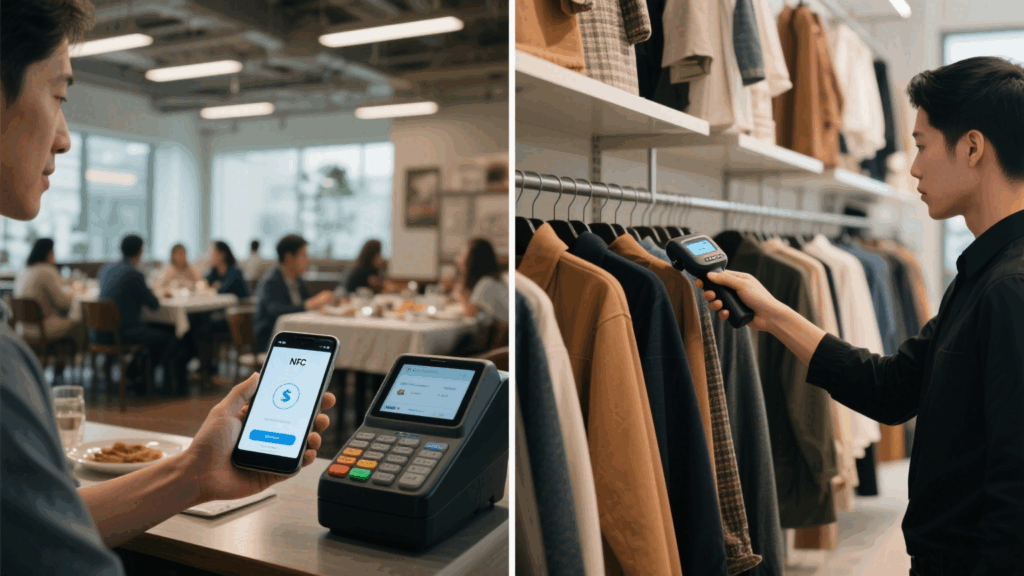
Although NFC is based on RFID technology, it cannot completely replace RFID in all use cases. In scenarios like warehouse management, logistics tracking, or long-distance identification, UHF RFID excels due to its extended read range of several meters.
NFC, on the other hand, is ideal for access control, mobile payments, and ID verification—applications that require close-range interaction. In summary, NFC can be used as a replacement for certain HF RFID use cases but not for LF or long-range RFID applications.
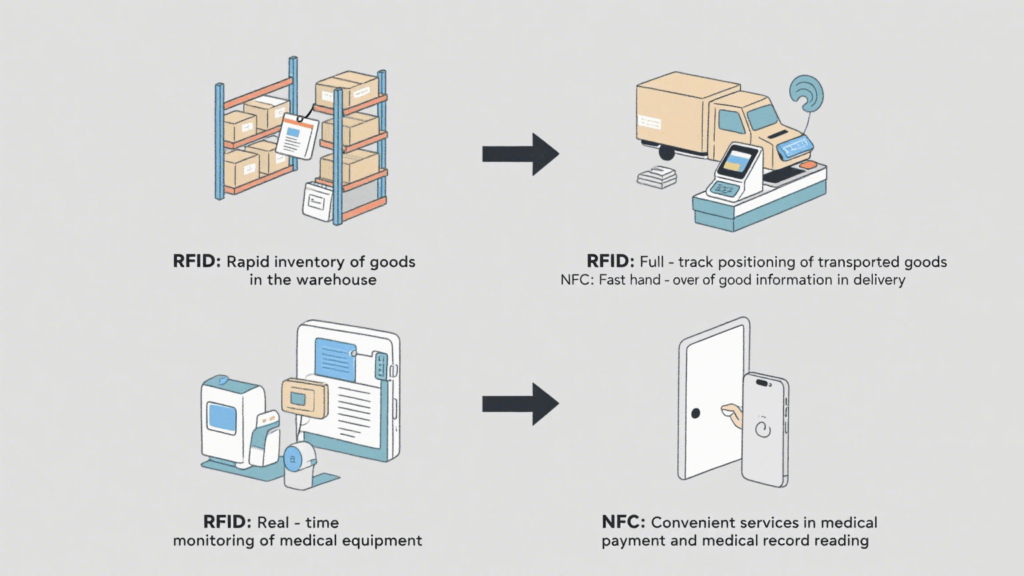
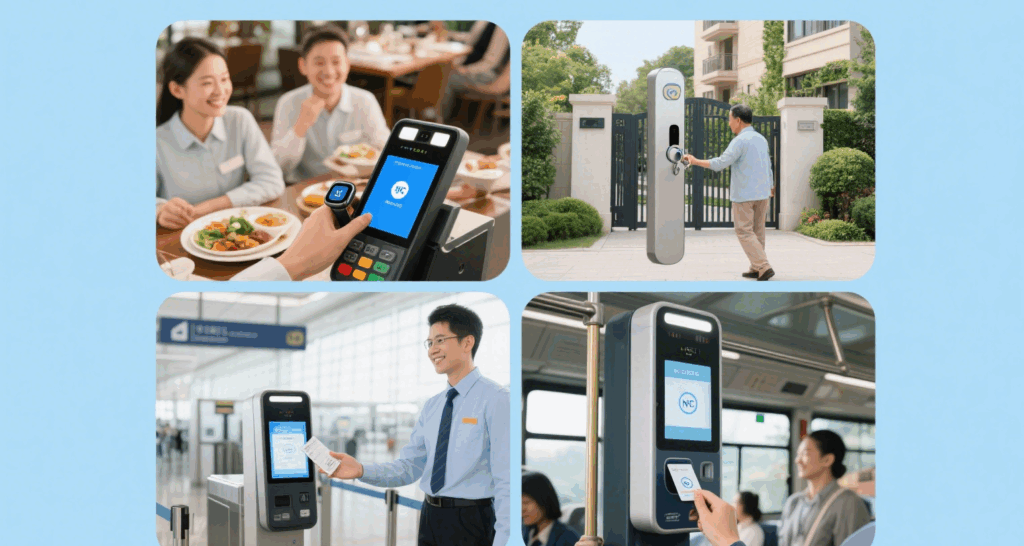
NFC offers two-way communication, allowing data transfer between mobile devices and NFC readers. It’s low-cost and easy to deploy. Common applications include access cards, smartphone payments (like Apple Pay and Google Pay), digital tickets, and Bluetooth pairing.
However, its limitations include short reading distances and slower communication speed, making it unsuitable for industrial environments requiring large-scale or rapid identification.
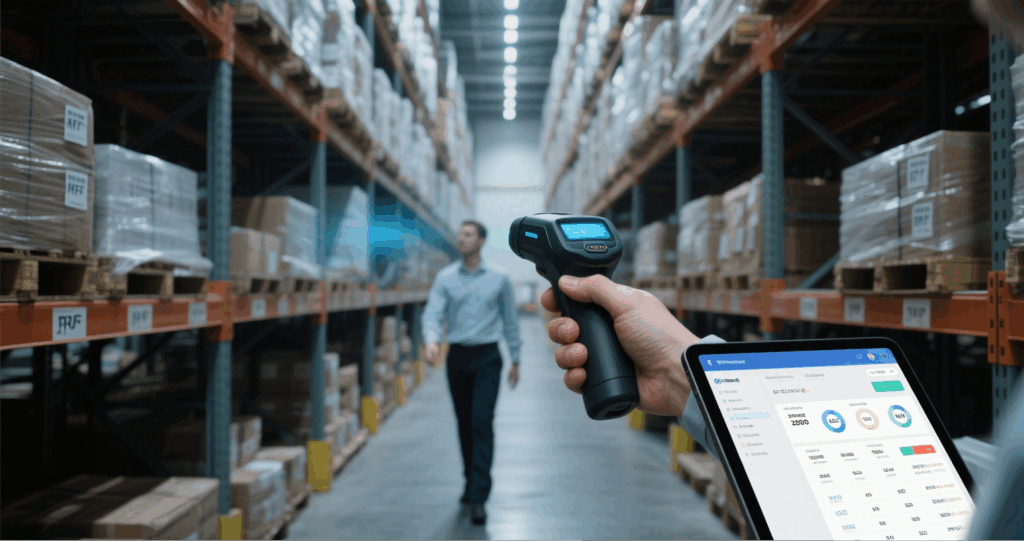
RFID covers a wide range of frequencies—from LF to UHF—and is widely used in warehouse automation, healthcare, retail anti-theft, and industrial settings.
UHF RFID can reach a read distance of over 5 meters, making it ideal for asset tracking, inventory auditing, and unattended operations. Compared to NFC, RFID offers greater industrial compatibility, batch reading, and strong anti-interference capabilities.
NFC can serve as specific implementation of RFID in certain use cases—especially those based on the 13.56 MHz HF standard
However, from broader perspective, NFC is more of subcategory of RFID. Businesses should evaluate reading distance, environment, read/write frequency, and cost when choosing between the two technologies to optimize efficiency.
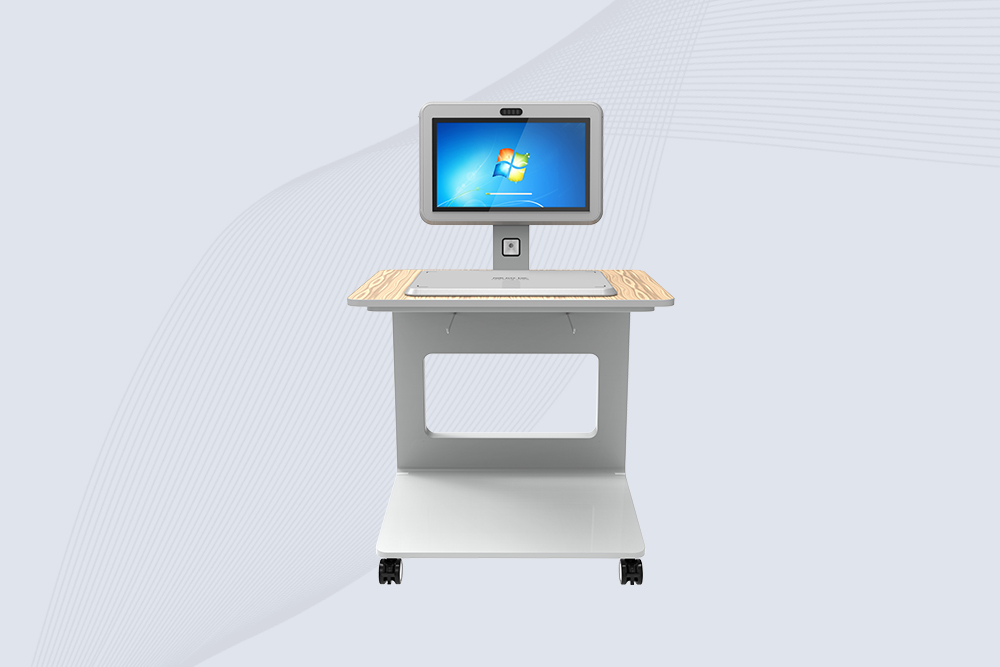
Cykeo’s CYKEO-DP11A RFID payment system combines UHF item recognition, facial authentication, and PCI-certified transactions for retail. Features Windows/Android dual OS, 4G connectivity, and SAP integration.
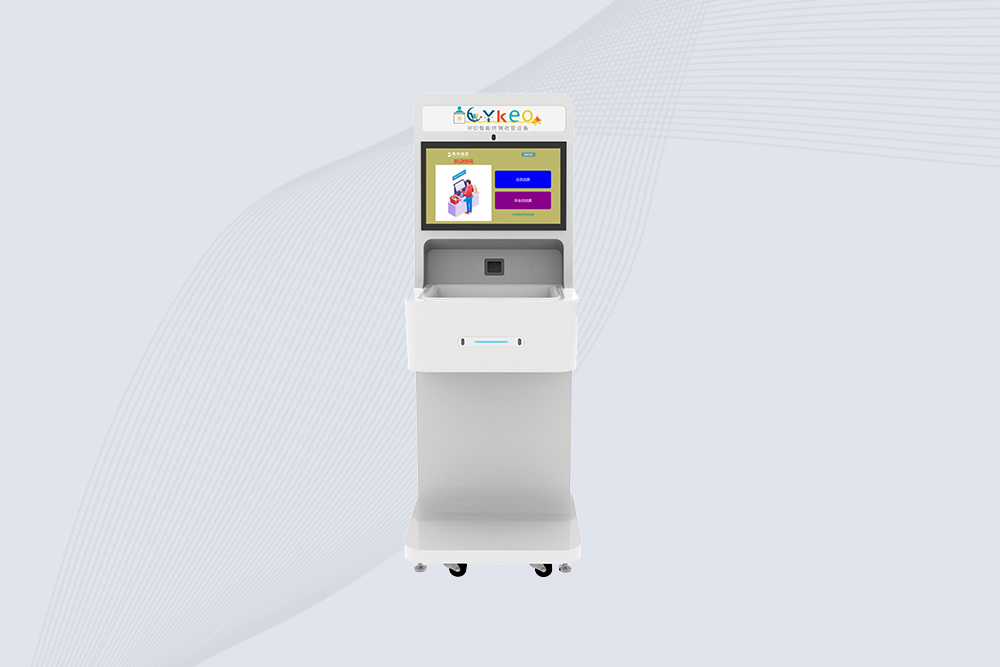
Cykeo CYKEO-DP11 UHF RFID Checkout Terminal streamlines bulk scanning operations with 5-tag/sec efficiency, dual OS compatibility (Windows/Android), and pharmacy-grade inventory management. Ideal for healthcare, retail, and unmanned stores, it ensures high-accuracy RFID bulk scanning with IP54 ruggedness and ISO 18000-6C compliance.
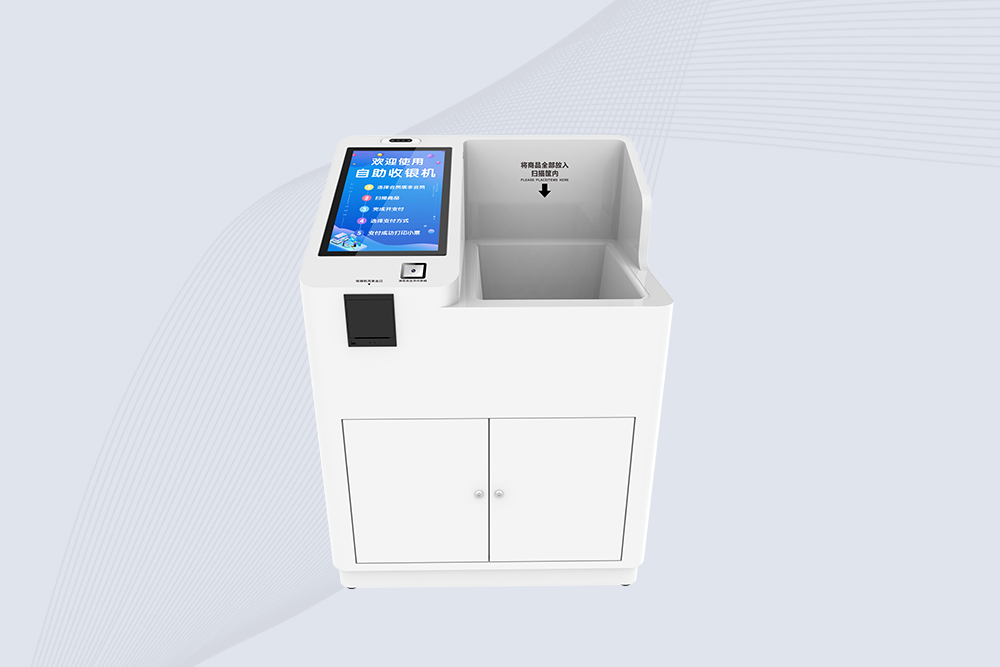
Cykeo’s unmanned RFID checkout Kiosk terminal enables 10-item bulk scanning in 3 seconds with 21.5″ touchscreen, anti-theft tag update, and POS integration for retail automation.
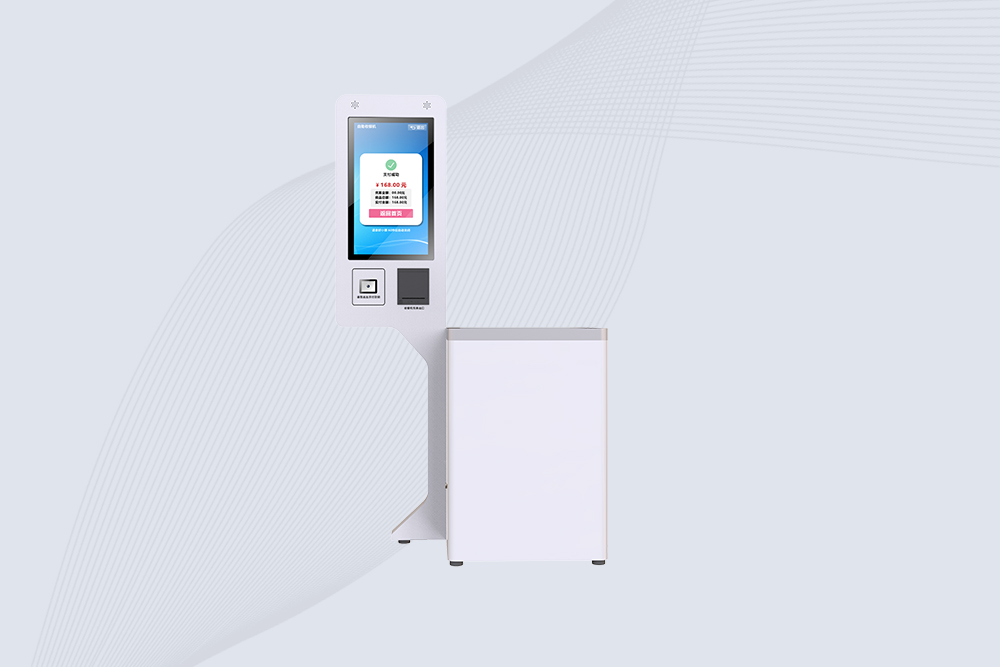
Cykeo’s CYKEO-DP11C UHF RFID self checkout kiosk enables unmanned retail with 10+ items/sec scanning, 21.5″ payment UI, and ISO 18000-6C compliance. Ideal for supermarkets and apparel stores.
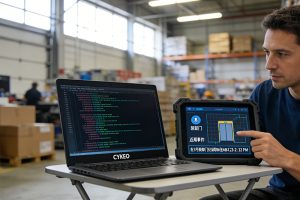
Learn how to read RFID data correctly. We detail the messy reality of raw data streams and the crucial steps to filter and use them in your business. Get the full process.
More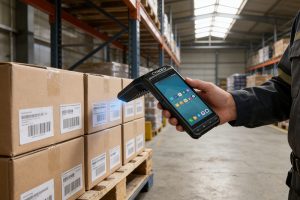
Wondering "can you read multiple RFID tags at once"? Discover how anti-collision algorithms enable batch reading, read rates by frequency, and real-world performance limits with CYKEO.
More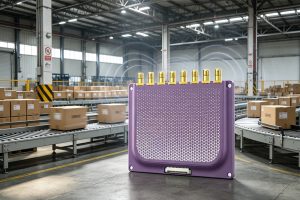
Learn how UHF RFID reader modules work and what OEM manufacturers and system integrators should consider before choosing one for industrial RFID applications.
More
RFID tag price varies more than most buyers expect. From chip type to volume scale, learn what actually affects cost and how to avoid overpaying.
More