 Cykeo RFID IoT Solution Products R&D Manufacturer
Fixed RFID Readers
Cykeo supplies fixed RFID readers for permanent installation in RFID systems, including forklift RFID readers, 4-port, 8-port and 16-port fixed readers.
These uhf readers are commonly used in access control, asset tracking, warehouse checkpoints and automated identification systems where stable, continuous reading is required.
SDK, API and demo software are provided to support integration with existing software platforms. For uhf reader selection, port configuration or antenna matching, Cykeo’s technical team can offer basic technical guidance during system design.
Industrial RFID Reader Product Overview
A fixed RFID reader is designed to operate at a fixed location and work continuously as part of an RFID system.
Unlike handheld devices, fixed readers are installed on walls, gates, cabinets, forklifts or inside equipment, and they rely on external RFID antennas to read RFID tags.
Read More
In real installations, reading performance depends on antenna type, number of antenna ports, output power settings, installation height and surrounding structures. Multi-port fixed readers allow several antennas to be connected, making it possible to cover wider areas or multiple directions.
Fixed RFID readers transmit RF signals through connected antennas and receive responses from RFID tags that contain unique identification data. This enables automatic identification without manual scanning, even when goods, vehicles or assets are moving through the reading area.
Common Application Areas:
1.Warehousing and Logistics Checkpoints
In warehouses and logistics centers, Cykeo fixed RFID readers are installed at entry and exit points to identify pallets, containers and goods. Operators can confirm movements without stopping forklifts or opening packages.
2.Forklift Identification Systems
Forklift RFID readers are mounted directly on vehicles to read location tags, pallet tags or floor markers. This setup supports real-time tracking and improves warehouse operation accuracy.
3.RFID Gates and Channels
4-port, 8-port and 16-port fixed readers are commonly used in RFID gate systems. Multiple antennas are deployed to form a reading corridor, ensuring stable tag detection as items pass through.
4.Asset Management
Factories, hospitals and construction sites use fixed vehicle rfid readers to monitor tools, machines and mobile equipment. Once assets are tagged, their presence can be checked automatically, helping reduce loss and improve record accuracy.
5.Access Control Systems
fixed uhf rfid reader are installed at doors, gates and restricted areas. Staff cards, badges or vehicle tags can be read automatically, allowing access without manual verification.
6.Vehicle Identification Systems
Parking facilities and industrial yards use fixed RFID readers to identify vehicles as they approach gates. This supports smoother traffic flow and reduces waiting time.
7.Smart Cabinets and Equipment
Many customers integrate rfid stationary reader into smart cabinets, lockers or custom equipment. With suitable antennas, the system can automatically identify stored or retrieved items.
8.Industrial Automation
In production environments, rfid industrial reader are integrated into automated lines to track materials, workpieces or carriers as they move between processes.
9.Retail and Inventory Control
Retail warehouses install fixed readers at inventory points to speed up stock verification. Multiple tagged items can be identified at once without manual scanning.
10.Custom OEM Projects
Companies with in-house machining and assembly capabilities often purchase rfid chip reader as core hardware and build their own RFID systems, such as access control units or automated storage equipment.
About Cykeo
Cykeo is an RFID hardware manufacturer focused on stationary rfid reader, RFID modules and RFID antennas.
Our products are developed for software developers, system integrators, solution providers and enterprise customers who build complete RFID systems for their own applications.
Instead of closed systems, Cykeo offers flexible hardware together with open SDKs and APIs, allowing customers to integrate RFID functions into their own software platforms, mechanical designs and project solutions.
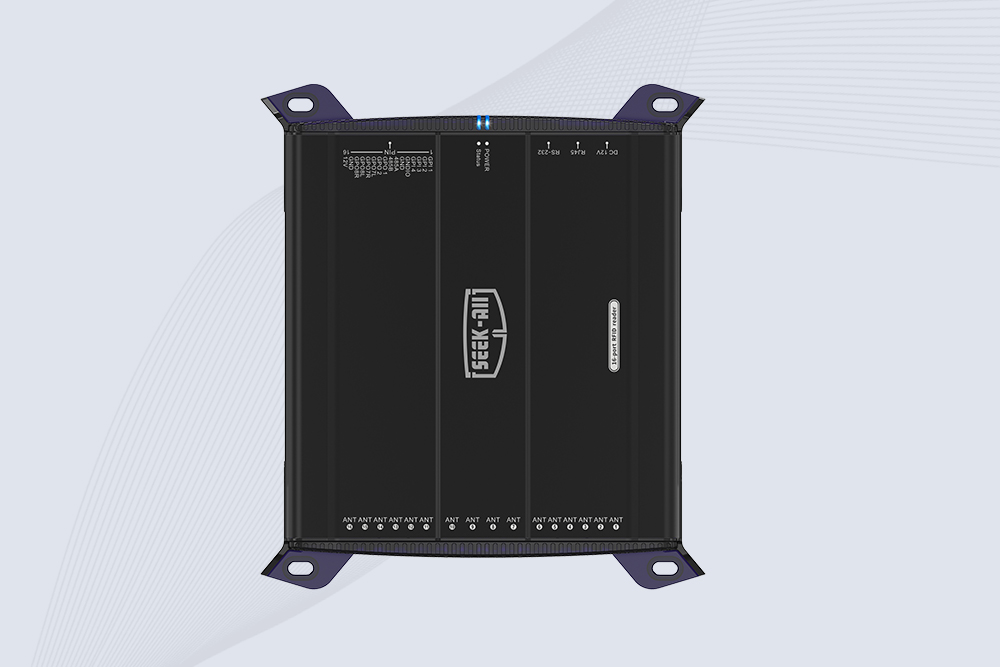
SSD-R16L 16-Port Fixed UHF RFID Reader
SSD-R16L Multi-Channel RFID Infrastructure for Automated Inventory Management ✔️ 16-Port High-Density RFID Reading Equipped with 16 SMA antenna ports, SSD-R16L supports multi-antenna deployment for warehouses, retail stores, logistics, production lines, and large-area RFID identification. ✔️ High-Speed & Long-Range Performance With up to 33...
More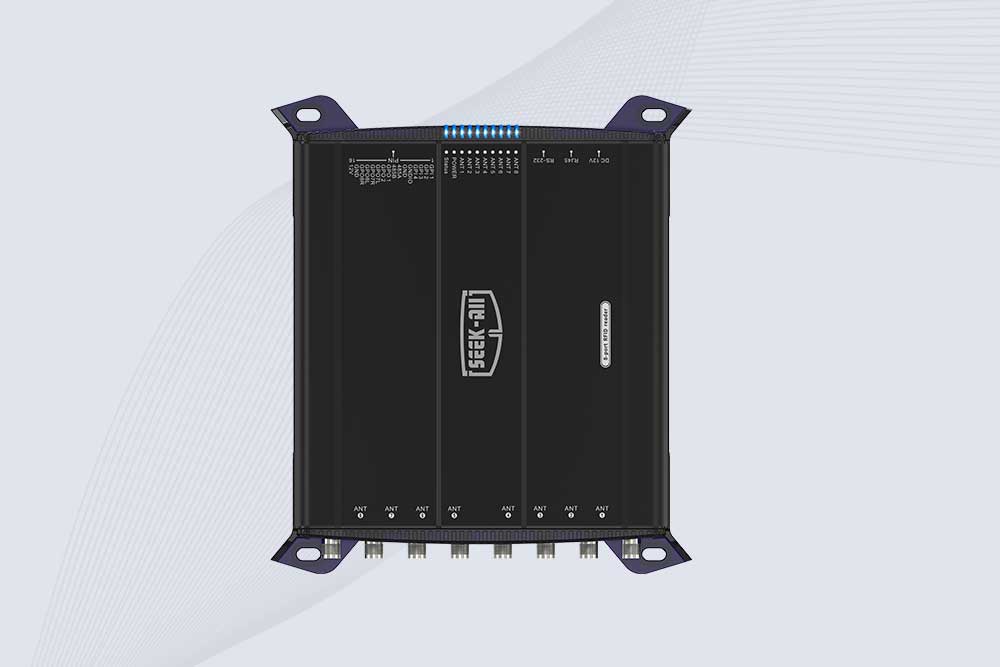
SSD-R8L 8-Port Fixed UHF RFID Reader
SSD-R8L 8-port UHF RFID reader with 33dBm output, up to 20m reading range and 600+ tags/s recognition. Ideal for warehouse, logistics, retail and asset tracking.
More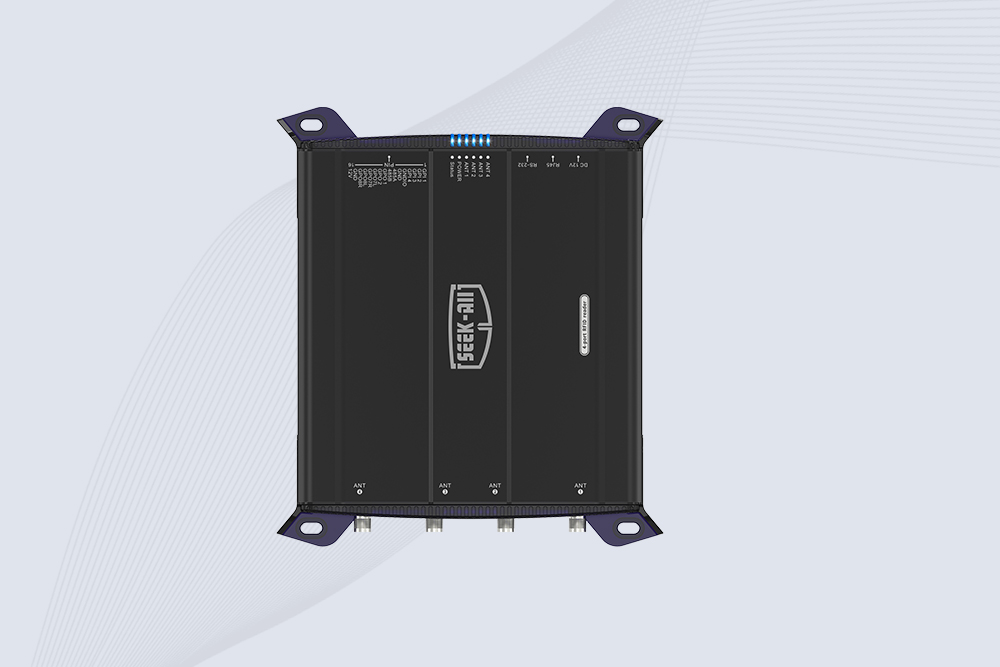
SSD-R4L 4-Port Fixed UHF RFID Reader
SSD-R4L is a 4-port UHF RFID fixed reader with 33dBm output power, up to 20m reading range, EPC C1G2 support and 600+ tags/s reading speed.
More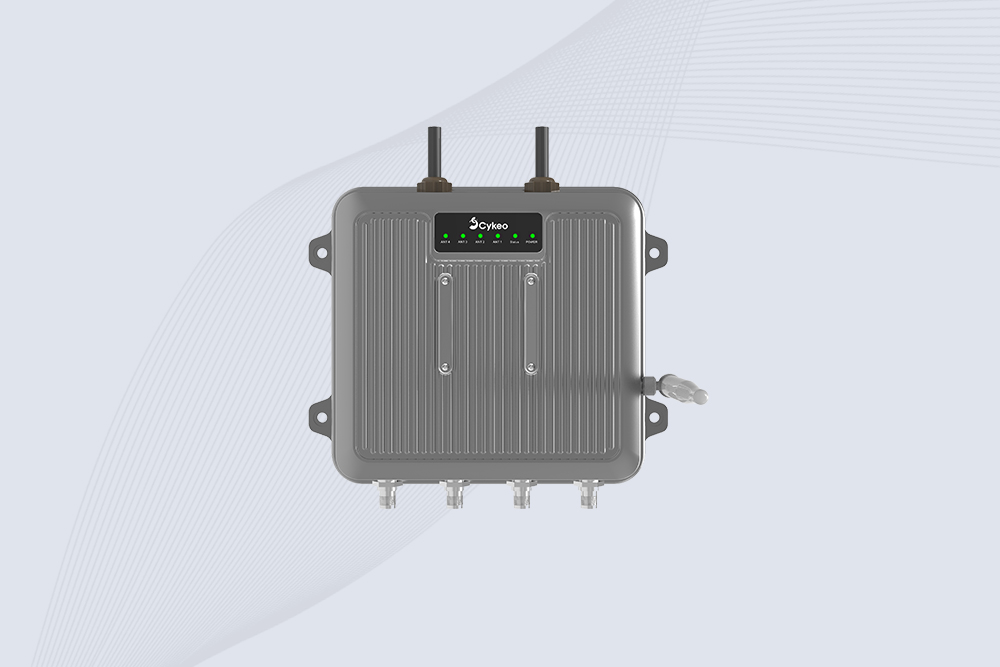
CYKEO-C1 Industrial Forklift RFID Reader
Cykeo CYKEO-C1 industrial Forklift RFID Reader features 20m read range, 600 tags/sec scanning, Impinj R2000 chipset, and IP67 rugged design. Ideal for warehouse logistics and manufacturing. Supports ISO 18000-6C/6B protocols.
More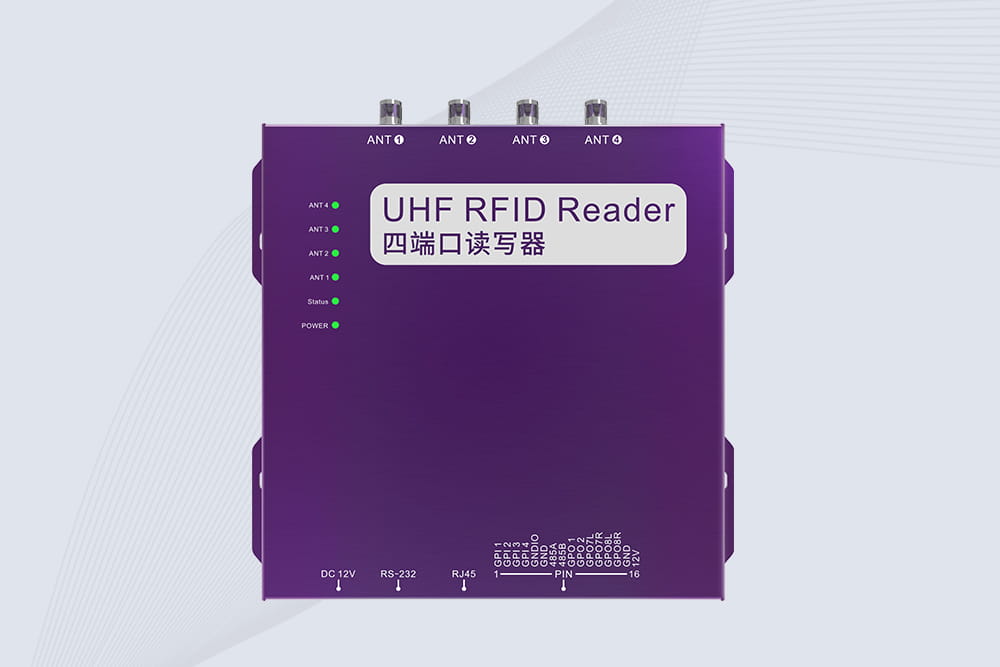
CYKEO-R4 4-Port UHF RFID Fixed Reader
Cykeo CYKEO-R4 industrial UHF RFID Fixed Reader features 4 TNC ports, 400+ tags/sec speed, IP67 housing, and global frequency compliance for vehicle inspection, smart warehouse, and asset management systems.
More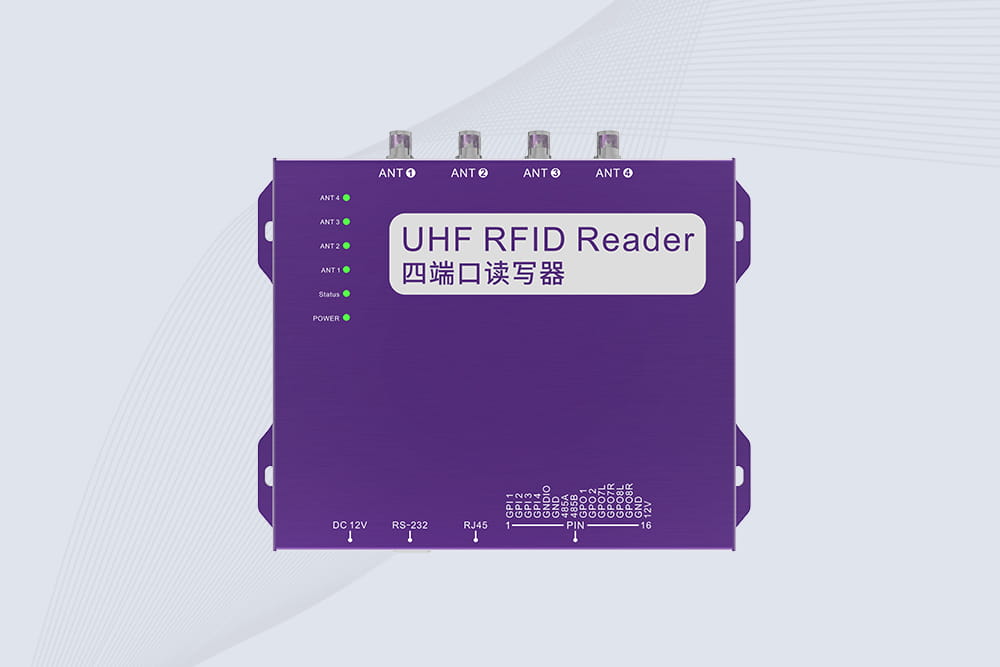
CYKEO-R4L 4-Port Fixed UHF RFID Reader
Cykeo's CYKEO-R4L 4-port Fixed UHF RFID Reader delivers 400 tags/sec scanning, ISO 18000-6C compliance, and IP65 protection. Ideal for warehouse automation, manufacturing WIP tracking, and logistics management.
More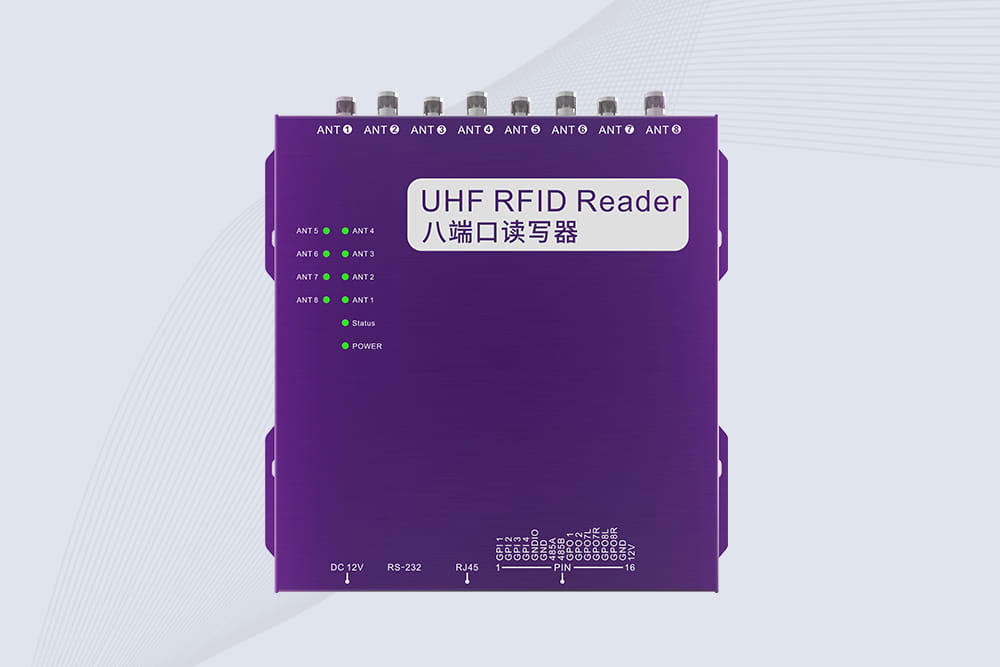
CYKEO-R8L 8-Port Fixed RFID Reader
CYKEO CYKEO-R8L Fixed RFID Reader with 8-port UHF design, Impinj-based RF core and up to 20m read range. An industrial Fixed RFID Reader for vehicle inspection, warehouse portals, smart manufacturing lines and secure access checkpoints.
More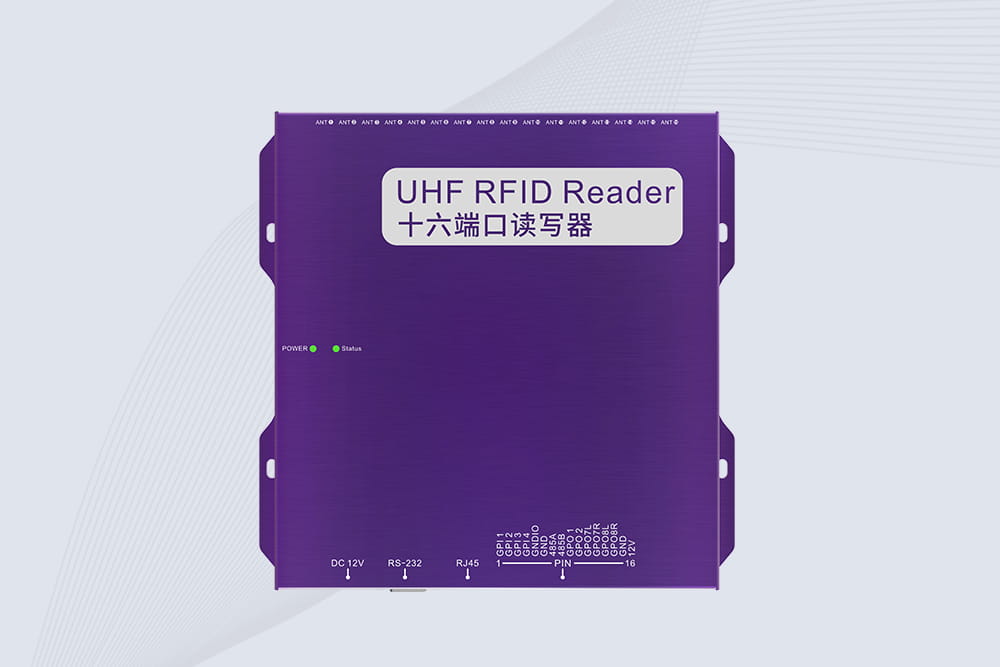
CYKEO-R16L 16-port UHF RFID Fixed Reader
RFID Fixed Reader from CYKEO – the CYKEO-R16L 16-port UHF fixed reader for warehouses, smart cabinets, and production lines. Long-range, multi-tag reading, stable performance for 24/7 industrial use.
MoreFixed UHF RFID Readers
RFID Fixed Readers from Cykeo offer consistency in high performance. Our Fixed RFID Readers offer the strong functionality needed to jumpstart a successful RFID system. An UHF RFID Reader is a radio frequency transmitter and receiver. RFID Readers can read and write information to an RFID tag. stationary rfid reader can also be fixed or portable. Portable RFID Readers can be installed or carried almost anywhere.
Cykeo offer a very strong after-sales team and rapid technical support services, including support for SDKs, APIs, software integration, system development, mobile or desktop applications, as well as any related configuration or troubleshooting assistance, making your project very convenient from planning to implementation.
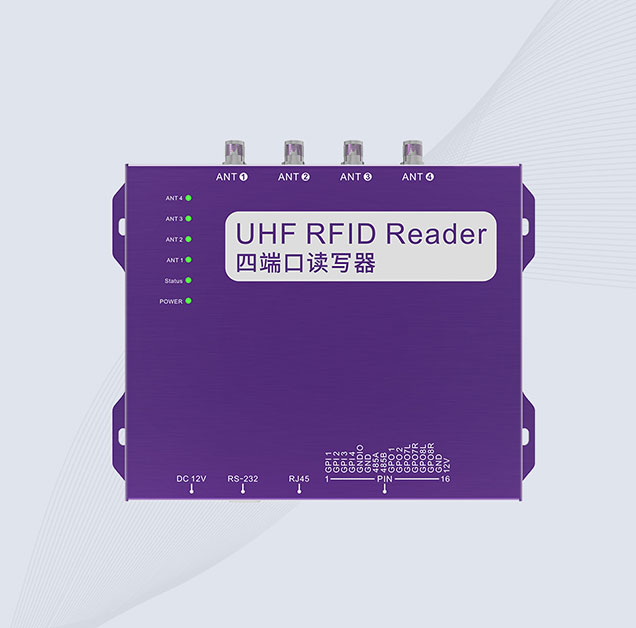
More about RFID Fixed Readers
UHF RFID Fixed readers are powerful devices that enable seamless communication with RFID tags, facilitating efficient data capture and automation. These industrial rfid reader use radio frequency waves to identify and track items or individuals, making them essential for industries like retail, logistics, and healthcare. By leveraging UHF RFID readers, organizations can reduce errors, streamline operations, and gain real-time visibility into their processes. This technology is ideal for applications such as inventory tracking, access control, and asset management.
At Cykeo, we offer a wide range of industrial RFID readers to suit various applications and industries. From handheld RFID readers, USB RFID readers, Long Range RFID Reader, Portable RFID Reader, RFID Gate Reader, rfid reader module, and fixed RFID readers to multi-functional, multi-frequency options, our carefully developed product portfolio provides RFID hardware for any type of system and project. Whether you’re upgrading your supply chain operations or enhancing workplace security, our industrial rfid reader deliver reliability, precision, and performance to meet your business needs.
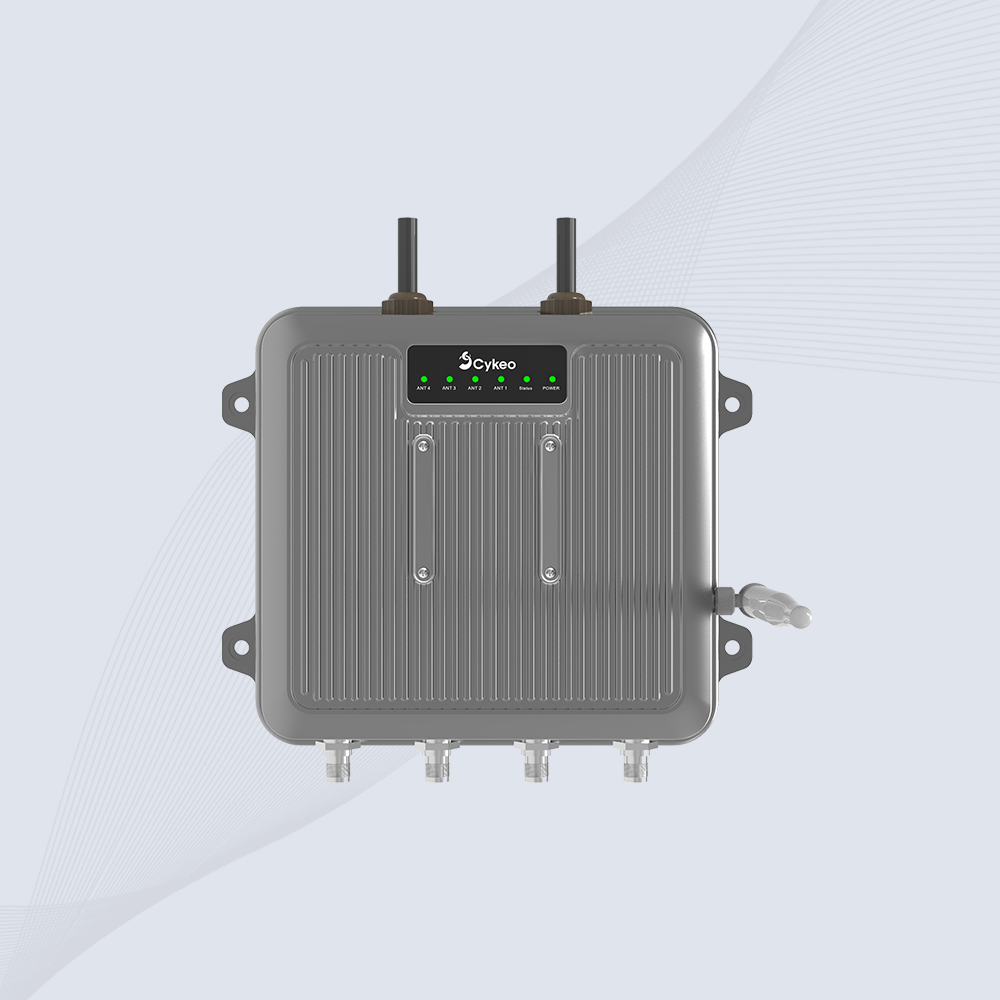
More about RFID industrial reader
The CYKEO RFID industrial reader is built for software companies, system integrators, and solution providers that need dependable RFID performance in real operating environments. Designed for forklifts, warehouse gateways, production lines, and mobile equipment, it provides stable tag reading where continuous movement, metal surroundings, and busy workflows can challenge ordinary devices.
With strong multi-tag reading capability and flexible antenna expansion, the industrial rfid reader helps capture accurate data in real time for pallet tracking, asset management, and automated logistics processes. Standard communication interfaces make integration with WMS, MES, ERP, or custom platforms straightforward, reducing development time and deployment risk.
Its rugged design is especially suited for industrial use, offering reliable operation on moving vehicles such as forklifts or AGVs where vibration resistance matters. For partners delivering RFID projects to B2B customers, the CYKEO RFID industrial reader offers a practical balance of performance, integration flexibility, and long-term stability without unnecessary complexity.
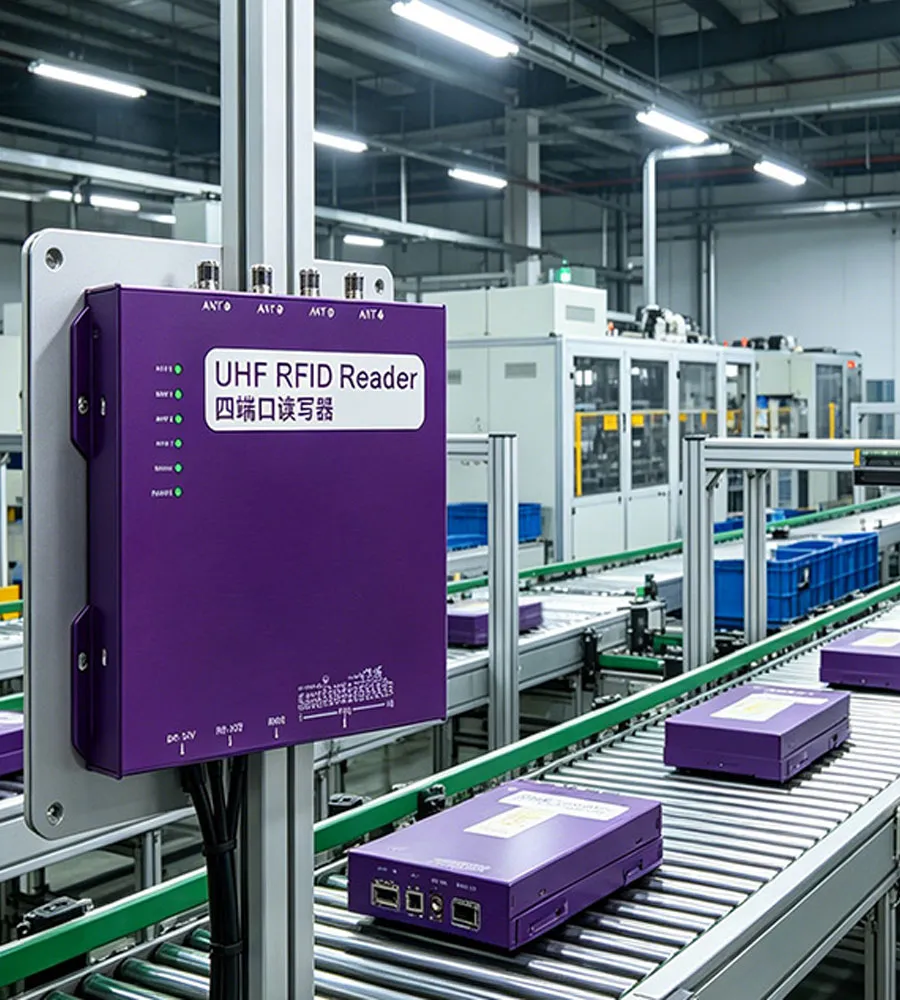
What Are Fixed RFID Readers?
Fixed RFID readers are stationary radio frequency identification devices designed to automatically identify, track, and manage RFID-tagged assets, products, and equipment within a designated area. Unlike handheld readers, fixed RFID readers operate continuously and are typically installed at entry points, conveyor lines, warehouse aisles, production stations, and other monitoring locations. When combined with RFID antennas, they provide reliable, long-range data capture for real-time visibility and process automation across logistics, manufacturing, retail, healthcare, and industrial environments.
- Automatic identification: Continuously reads RFID tags without manual intervention, enabling real-time asset, inventory, and personnel tracking.
- System integration: Supports SDKs, APIs, and multiple communication protocols for seamless integration with WMS, ERP, MES, and custom software platforms.
- Multi-antenna capability: Available in 4-port, 8-port, and 16-port configurations, allowing coverage of multiple read zones through external RFID antennas.
- High-speed data capture: Processes large volumes of RFID tag data quickly and accurately, even in dense tag environments.
- Industrial-grade design: Built for stable operation in warehouses, factories, logistics centers, and other demanding industrial applications.
- Scalable deployment: Supports applications ranging from small tracking stations to large-scale enterprise RFID infrastructure with centralized management.
Decision Framework
When Should You Choose a Fixed RFID Readers?
✓ Good Fit
Choose a Fixed RFID Reader When…
- Your operation requires automated RFID reading at dock doors, conveyor lines, warehouse aisles, or production stations.
- Large coverage areas need monitoring — external antennas can be deployed to create multiple read zones.
- High tag volumes must be processed — capable of reading hundreds of tags simultaneously.
- Integration with WMS, ERP, MES, or custom software is required — SDKs and APIs simplify deployment.
- Real-time visibility is important — continuous RFID data capture supports automated tracking and inventory management.
- Long-term industrial operation is needed — designed for 24/7 performance in logistics, manufacturing, and warehouse environments.
✗ Poor Fit
Don't Choose a Fixed RFID Reader When…
- Only occasional tag scanning is required — a handheld or USB RFID reader may be more practical.
- The application requires frequent mobility — fixed readers are designed for permanent installation.
- Available installation space is extremely limited — antennas and mounting locations must be considered.
- Read distances are only a few centimeters — HF or desktop RFID solutions may be more suitable.
- Project budgets favor simple single-point identification rather than infrastructure-level RFID deployment.
- The application does not require continuous monitoring or automated data collection.
Note For Partners: For many RFID projects, fixed readers handle automated portal, conveyor, and warehouse tracking, while handheld or desktop readers are used for tag commissioning, exception handling, and spot verification.
Fixed RFID Reader vs RFID Reader Module
| Feature / Parameter | Fixed RFID Reader | RFID Reader Module |
|---|---|---|
| Definition | Fully integrated RFID reading device with enclosure, power supply, and communication ports | Embedded OEM board/module requiring integration into host device |
| Integration Level | Standalone system, plug-and-play deployment | Requires hardware and firmware integration |
| Performance Stability | High and optimized for continuous industrial operation | Depends on host system design and integration quality |
| Read Range | Typically 5–20+ meters (depends on antenna and power class) | Variable; depends on external antenna design and system tuning |
| Processing Capability | Built-in CPU and firmware for tag filtering and data handling | Limited; relies on external processor or MCU |
| I/O Interfaces | Ethernet, RS232, RS485, GPIO, Wiegand, PoE (varies by model) | SPI, UART, USB, GPIO (module-level signals) |
| Deployment Flexibility | Fixed installation (gates, portals, conveyors, dock doors) | Highly flexible for embedded applications (handheld, IoT, terminals) |
| Size & Form Factor | Larger, industrial-grade enclosure | Compact PCB module |
| Power Supply | External DC/AC or PoE | Low-voltage DC, integrated into host system |
| Environmental Rating | IP65–IP67 industrial protection in many models | No enclosure; depends on final product design |
| Heat Dissipation | Active/optimized thermal design for continuous use | Requires host system thermal management |
| Scalability in Systems | Easier for multi-reader large deployments | Better for mass OEM integration into devices |
| Customization Level | Limited (firmware/API level customization) | High (hardware + firmware + system-level integration) |
| Typical Applications | Warehousing, logistics gates, tolling, access control, production lines | Smart devices, handheld readers, embedded IoT tracking systems |
| Maintenance | Low; replaceable unit-level maintenance | Requires system-level debugging and support |
| Cost Structure | Higher unit cost, lower integration cost | Lower unit cost, higher integration engineering cost |
Our customers give this evaluation
Real feedback from global B2B users after deploying CYKEO fixed RFID readers in logistics, manufacturing, and automation projects.

Michael Turner
Systems Integration Engineer (United States)
⭐⭐⭐⭐⭐
Based in Dallas, Texas, we deployed CYKEO-R8L (8-port UHF Fixed RFID Reader) in a warehouse automation project for a 3PL logistics client. We connected 6 units of R8L paired with 12dBi circular polarized RFID antennas for dock door and pallet tracking.
The SDK (Java + C# cross-platform) made integration into our WMS significantly faster. Our developers used the API to map real-time tag movement into SAP-based workflows.
CYKEO engineering team supported us during middleware customization and antenna tuning. Shipment lead time was consistent even during batch orders of 50+ units.
Forklift zone tracking was later expanded using CYKEO-C1 Industrial Forklift RFID Reader, improving loading accuracy by reducing manual scanning steps.
OEM customization was handled smoothly, including firmware adjustment for multi-antenna switching logic.
Result: Inventory visibility improved, dock errors reduced significantly, and deployment time shortened by ~30%.

Hans Becker
Industrial Automation Consultant (Germany)
⭐⭐⭐⭐⭐
We implemented CYKEO-R16L (16-port UHF RFID Fixed Reader) in an automotive parts warehouse near Stuttgart. The system used 9dBi linear antennas for dense rack-level tracking.
R16L handled high tag density without packet collision issues. Our PLC system was connected via API using C# middleware.
CYKEO provided strong pre-sales engineering support, especially in antenna layout simulation. After-sales debugging assistance helped us fine-tune read zones.
We also tested CYKEO-R4L in a smaller staging area for workstation-level verification.
Result: Improved traceability across assembly kits and reduced missing part incidents during dispatch.

Ravi Mehta
Software Development Lead (India)
⭐⭐⭐⭐⭐
We integrated CYKEO-R4 (4-Port UHF RFID Fixed Reader) into a retail inventory SaaS platform deployed across multiple warehouses in Mumbai and Pune.
Using 8dBi antennas, we built a real-time stock visibility module. Java SDK allowed rapid deployment into our microservices architecture.
CYKEO technical team supported API optimization and helped us reduce latency in tag polling intervals.
We also tested CYKEO-C1 on forklift workflows in cold storage environments.
OEM branding customization was applied for our reseller channel.
Result: Improved inventory sync accuracy and reduced manual scanning workload by over 40%.

Lucas Almeida
Logistics Operations Manager (Brazil)
⭐⭐⭐⭐⭐
We deployed CYKEO-R4L (4-Port Fixed UHF RFID Reader) in a distribution center in São Paulo. Setup included 6dBi antennas at conveyor entry and exit points.
The system was integrated into our warehouse management software via C# API. Forklift operations were later enhanced using CYKEO-C1 for loading verification.
CYKEO provided fast shipping support for pilot deployment units and assisted with antenna placement optimization remotely.
OEM customization allowed us to align device firmware with our barcode-RFID hybrid system.
Result: Faster inbound/outbound processing and fewer shipment mismatches.

Omar Al-Mansoori
IT Infrastructure Manager (UAE)
⭐⭐⭐⭐⭐
In Dubai Free Zone logistics hub, we deployed CYKEO-R8L and CYKEO-R16L combined setup for container and pallet tracking.
We used 12dBi antennas for dock doors and 9dBi antennas for internal storage aisles. Integration was done through Java-based middleware connected to Oracle database systems.
CYKEO provided strong OEM flexibility and supported Arabic UI localization for our internal dashboard.
Technical support response time was fast during peak deployment.
Result: Improved cross-dock tracking accuracy and reduced manual verification delays.

James Collin
Warehouse Engineer (United Kingdom)
⭐⭐⭐⭐⭐
We implemented CYKEO-R4L and CYKEO-R8L in a UK e-commerce fulfillment center in Birmingham. 8dBi antennas were installed at packing stations and sorting lanes.
Java SDK integration allowed seamless connection with our custom-built WMS. CYKEO engineering support assisted in resolving multi-reader interference issues.
We also tested CYKEO-C1 forklift RFID readers for outbound pallet verification.
OEM customization enabled us to match device naming conventions with our internal asset system.
Result: Reduced picking errors and improved real-time stock accuracy.

Sophia Lim
IoT Solutions Architect (Singapore)
⭐⭐⭐⭐⭐
We deployed CYKEO-R16L in a smart logistics pilot project at Jurong Port. The system used 9dBi antennas for container yard tracking.
The API and Java SDK were integrated into our IoT cloud platform, enabling real-time visualization of asset flow.
CYKEO provided strong collaboration during system architecture design, especially in multi-reader synchronization.
We also used CYKEO-R4 for indoor verification zones.
Result: Enabled end-to-end container visibility across port operations.

Carlos Ramirez
Procurement & Technical Manager (Mexico)
⭐⭐⭐⭐⭐
We deployed CYKEO-R4 and CYKEO-C1 across a manufacturing plant in Monterrey. 6dBi antennas were used for workstation-level identification.
The C# SDK allowed easy integration into our production tracking system. CYKEO supported OEM customization for labeling and firmware configuration.
Shipping batches arrived on schedule even for mixed-model orders.
Technical support assisted us in calibration of read zones during production line setup.
Result: Improved production traceability and reduced misallocated components.
Fixed RFID Reader Guide
FAQ About RFID Stationary Reader
How do Fixed RFID Readers Work?
A fixed RFID reader does one thing continuously: it sends out radio signals and waits.
Once a tagged item moves into the reading zone, the tag wakes up and reflects data back. No button. No trigger. It just happens. That’s the whole point of a fixed reader.
In warehouses, these uhf readers are bolted to walls, gates, ceilings, or conveyor frames. They don’t move, and they’re not meant to. The system is designed so goods move, not the rfid stationary reader. When everything is aligned properly, reads happen in the background and no one notices. When it’s not aligned, you notice very quickly.
Are Fixed RFID Readers Accurate in Warehouses?
They can be. They also fail badly when installed wrong.In controlled zones like dock doors or conveyor choke points, fixed readers are extremely accurate. Over 99% is normal. In wide-open storage areas, accuracy depends entirely on layout, antenna direction, and tag placement.Most “missed reads” are not hardware problems. They’re design shortcuts made early in the project.
How to Connect an RFID Reader to a Computer?
A fixed RFID reader does one thing continuously: it sends out radio signals and waits.
Most fixed readers connect by Ethernet. That’s the default in warehouses for a reason.Once connected, the rfid stationary reader sends data to software using APIs or middleware. Some setups use USB or serial ports, but that’s more common in testing rooms than real facilities.The physical connection is easy. The real work starts when you map tag data to your system logic.
What’s the difference between a fixed RFID reader and a handheld RFID reader?
The difference shows up the moment you try to use them in the real world.A uhf fixed readers is installed in one place and stays there. Think dock doors, conveyor lines, gate antennas, or warehouse choke points. It runs continuously, reads tags automatically as they pass by, and usually connects to multiple external antennas. No trigger, no aiming. It’s built for volume, speed, and consistency. Once set up properly, it just works in the background.
A handheld RFID reader is the opposite in feel. Someone holds it, walks around with it, points it at shelves or assets, and pulls a trigger. It’s flexible and fast for spot checks, cycle counts, or finding missing items. But it depends on the operator. Angle matters. Distance matters. Fatigue matters.
In short:
Fixed readers are about automation and scale.
Handheld readers are about mobility and control.
If you need continuous tracking, fixed wins. If you need flexibility and movement, handheld makes more sense.
What Is the Typical Range of an RFID Fixed Reader?
There’s the lab answer, and then there’s the real one.On paper, a UHF fixed RFID reader can reach 20 meters or more. In a warehouse, expect 3 to 8 meters to be reliable. Sometimes less.etal racks, forklifts, stacked cartons, liquids—these all eat range. HF fixed readers stay short, usually under a meter. LF is even shorter and rarely used for warehouse tracking anymore.
Anyone promising full-range performance everywhere is skipping the environment part.
Can a UHF RFID Reader Read Multiple Tags at Once?
A fixed RFID reader does one thing continuously: it sends out radio signals and waits.
Yes. That’s exactly what UHF RFID is built for.A UHF industrial rfid reader doesn’t wait for one tag at a time. It cycles through responses using anti-collision logic, pulling data from many tags in rapid bursts. Pallets, cases, loose items—it can read them all together.If it couldn’t, UHF RFID wouldn’t exist in logistics. Barcodes would still win.
How to Increase the Range of an RFID Reader?
Replacing the industrial rfid reader is usually the last thing you should do.Range improves fastest by changing antennas, repositioning them, and choosing better tags. Orientation matters more than power. So does distance to metal. Output power helps, but only within legal limits—and even then, gains are smaller than most people expect.When range is poor, the problem is usually layout, not hardware.
How much do fixed RFID readers cost?
There’s no single price, and anyone giving one number is oversimplifying.
In practice, most fixed RFID readers fall into a few rough ranges:
Entry-level models: Starting from $300,
Industrial or multi-port rfid stationary readers: Starting at $600,
High-performance systems with advanced filtering, rugged housing, or certifications: Starting from $1,000,
The industrial rfid reader itself is only part of the cost. Antennas, cables, mounting hardware, software licenses, and integration time often matter more than the sticker price. I’ve seen projects where a cheaper industrial rfid reader ended up costing more because it couldn’t handle the environment or read rates.
A good rule of thumb:
Don’t buy a rfid stationary reader just on price. Buy it based on read reliability, environment, and long-term stability. The wrong choice is usually more expensive than the right one.